Tuesday, March 4, 2014

Falling Faster Than You Can Run

It goes a little bit like this...

Arrive at coffee shop. Dance with your decision to order coffee or tea since it will be the second cup of the morning. Wonder if it's actually caffeine that incites jumpy hands and a wandering mind, or just the weight of time. Think about True Detective's treatment of time and Sunday's penultimate episode. Time is a flat circle, you know. Realize it's your turn to order. Panic order a latte and bagel with cream cheese, which was never a part of the plan. Request extra cream cheese. Because, why not?

Realize there are no available seats with easy access to a power plug-in. Feel sadness, or something similar, about your inability to remember to keep your devices charged. Look at your phone. 21% and waning. Unpack your bag of tricks anyway. Computer, phone, headphones, book, second book (as if you might finish the first book in a day's work); beloved Pilot pen. See how many windows you can actually open on Google Chrome. Tweet something random. Get lost on Twitter. Read this. Think it's fantastic. Experience a fantasy daydream moment about the pulitzer prize. The image on the medal itself - how hard he must be pulling on the vestige of some ancient dream, about to fall.

Watch people - the way they move, the way they move when they know they are being watched - the way they like it, the way they don't. Realize time is waning just like your phone battery. Write a few sentences. Get distracted and then lost on a really weird Tumblr for longer than can accurately be admitted. Think about words. Yearn for your headphones to play your music even louder - the full consumption water gives when invading underwater ears. Get lost on Spotify; wonder why people don't use the private session feature more often. They should. 

Turn music even louder to drown out ladies who have weekday coffee dates sitting next to you. Turn down the music to listen to their Oscar recap. They loved Philomena and thought Lupita's dress was too low-cut since she's flat chested; so upsetting that Ellen would joke about Liza, just where was George Clooney? Sometimes people surprise you, sometimes they don't. Music turned back up for Ólafur Arnalds Living Room Songs. Swear you can feel it move from the middle of you and then outwards; sensations like the edges of fire or something more destructive. Think about the book sitting behind your computer. John Cheever, that Chekhovian storyteller of the suburbs - the doormen of the the Upper East Side, the illuminated houses in Connecticut suburbs where dark nights and long days reveal gin-soaked swimmers and the ghost of some summer’s past.

Vintage Cheever, Collected Stories

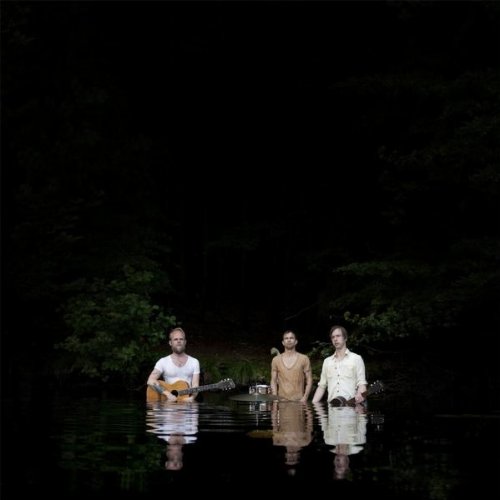
Feel hungry, but realize it’s an excuse to walk away. The stories we tell ourselves in procrastination or panic are far more survivalist than any real urge to feed or feel. Wonder if it's possible to create and remain invulnerable. See someone you know through the window; freeze in motion while you wonder if you should duck or wave. Press your back against the glass in hopes it might embrace or destroy you, a cool and terrifying illusion. Pray for silence, turn up the music until it hurts your ears. Take the final sip of cold coffee. Should have gotten tea. At some point in your Spotify session, rediscover Nathaniel Rateliff’s album, Falling Faster Than You Can Run. Realize (again) vulnerability is the point. Listen to the album multiple times. Make note in margin: running will do you no good, I'm going to fall, and probably should. Turn back to words. 

Falling Faster Than You Can Run
Mod y Vi Records
2014

“A writer can be seen clumsily learning to walk, to tie his necktie, to make love, and to eat his peas off his fork. He appears much alone and determined to instruct himself. Naive, provincial in my case, sometimes drunk, sometimes obtuse, almost always clumsy, even a selected display of one’s early work will be a naked history of one’s struggle to receive an education in economics and love.”
John Cheever - Preface, The Stories of John Cheever


Monday, January 6, 2014

Retrograde: A Return to Previous Themes

I suppose I should count it as propitious that I did not resolve to be timely this year. It's six days into the new year and I have to yet to fully grasp just what occurred in 2013. Not for lack of hunger or thirst, but for reticence to abbreviate and surmise. In some ways it was a cruel year, tragic and not without tempestuous clouds, but it was also a year of high notes - cultural fortitude and the undercurrent of some renaissance. Even if that's wishful thinking eventually we must always reprise to a previous theme, and it seems long overdue...

In 2013 we worshiped in CHVRCHES, praised Yeezus, and understood the bloodthirst of the Weekend vampire. Lourde told us we'll never be Royals, but baby George and the directionally confused demigod disagree. Some Twerk'ed or watched along as young entertainers sought infamy, or moments thereof, via public acts of absurdity. Actions without intention or cultural reference (even when misunderstood) are of the worst kind. We reveled in the bang of the onscreen apocalypse. Walter White went out with a whisper, as Jesse drove screaming into wild freedom. (Spoiler alert kids: he was definitely arrested one mile down the road, right?) Netflix forever changed the landscape of television consumption. Orange (and television binge-viewing) became the new black. Frank Underwood sauntered onscreen via stage left, soliloquist; reminiscent of some tragic, bloodied Scottish general. Reprise. Even in politics little was spared: secrets were leaked, the government went on vacation, and we lost many great minds including our South African, peaceful warrior.

In contemplation of the previous year and in anticipation for time still to come, I will share some of my personal highlights of the 2013 cultural landscape. They are not necessarily my critical tops, but they are pieces that continue to resonate with me. As I am perched in 2014 and ruminating on 2013, I find my first choice of song, Retrograde, very fitting.

Tune of the Year: Retrograde
Retrograde by James Blake is just plain sexy. Though Blake has created some controversy for himself by drawing a line in the dubstep sand, he is irrevocably talented and this sophomore album is so delightfully textured and full of the sounds that make him such a compelling artist: R&B, dubstep (the right kind), electronic, gospel, and solo piano. The beginning vocal loop could be the only thing on the track and it would still be the sexiest thing this year. Get into it.


Album of the Year: White Lighter, Typhoon
Originally, I thought of 2013 as the year of the female voice. From Lucius to Daughter to Haim to POLICA - all the sounds I kept returning to were female. But there was nothing else quite like Typhoon's White Lighter. A band comprised of eleven members - including female vocals and harmonies - Typhoon is more an orchestra than a band after all. Their heavy, full, sometimes clamorous sound is textured and rich and then literally collapses into reflective refrain. All of this is guided by Kyle Morton's lyrical storytelling. After a few listens you will see that in both sound and theme it is a concept album that tackles the arc of youth: growing older, gaining awareness and facing the strange and often noxious trials that rise out of that passage.


Documentary: The Stories We Tell
The Stories We Tell directed by Sarah Polley (Away from Her, Take This Waltz) was perhaps one of the most staggering, profoundly human pieces of art that I came across this year. Polley sets out to uncover family secrets and unbind the myths of her family's collective voices into one true narrative, but the story itself takes a hold of the feature and twists the genre into something else entirely. I will not spoil the film's most delicate surprise, which is not what it seems at all. It is deeply personal, permanently stained with nostalgia and so entirely human. Sarah's deft storytelling, immutable search for the truth, and Michael Polley's narrative carry the film through the twists and turns of a naturally messy history. In the end stories are just the lies we tell ourselves, are humans themselves are often are the most resounding anecdotes that can be imagined.

"When you're in the middle of a story, it isn't a story at all but rather a confusion, a dark roaring, a blindness, a wreckage of shattered glass and splintered wood, like a house in a whirlwind or else a boat crushed by the icebergs or swept over the rapids, and all aboard are powerless to stop it. It's only afterwards that it becomes anything like a story at all, when you're telling it to yourself or someone else."


Fiction: Tenth of December, George Saunders
This short story collection will make you feel; really feel. Feel so much that you laugh and cry at the same time; you wonder how language, having come so far, can still seem so imaginative and absolutely bizarre. Though Saunder's crafts strange worlds that appear like science fiction, the absurdity itself is that these worlds and their idioms are not so far from our current human condition. It is often vast and devastating within his dark landscapes, there is still a sense of humanity and shameless humor that is not to be missed. Read this book.


Television Series: Masters of Sex
It was a strange, but good year for television; still much was clouded by the haze of Walter's blue crystals. It was a finale seen round the world and to me was a bit lacking (but that's another story). For new debuts I loved the first season of Sundance's Rectify, which has been renewed for 2014, and I am slowly digesting Jane Campion's weird and wonderful Top of the Lake on Netflix. House of Cards, of course.
But the standout for me was Master's of Sex. The strength of acting, the simultaneous restraint and immodest hungriness, and the deftly told scientific history make it a very compelling series. Every character is round and full enough to carry the show itself, and bare enough to leave you breathless. I must admit something though...I haven't seen the whole first season. Having binge watched as many possible episodes over the holidays I'm still a few episodes behind the season finale. Perhaps like the show's subject matter itself, the near anticipation of the finale has kept me in wanting. Good art models the very arc of the emotions it hopes to elicit.


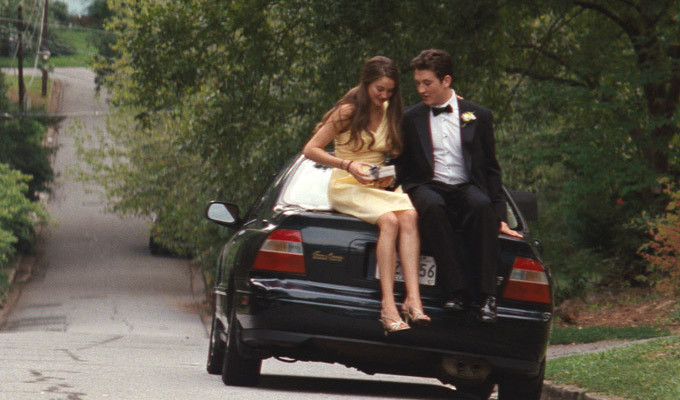
Scene Stealer: Miles Teller
For years I've been wishing that we could recreate young John Cusack and keep making heartbreaking but funny coming of age movies. Talk fast, love hard, and hold that boombox so good. Thanks for listening universe.


Movie: Breathe In
I've intentionally chosen a movie I think was overlooked and only really ran on the film festival circuit. There were many beautiful films last year, but this is one that perhaps you haven't seen. Drake Doremus (Like Crazy) tells stories the way you might recall them in your mind: as a visitor - with slow reluctance, memories flooding like water, music telling the tempo, and strange emotions extracted. Performances by Guy Pearce, Felicity Jones, and Amy Ryan were strong and heartbreaking. The score by Dustin O'Halloran is so deftly felt it adds another presence to the film; it has also found a permanent home in my music rotation. Breathe In is best viewed through the lens and weight of a short story; breathe in, but don't be prepared to breathe out just yet.


Come Back Kid: Jay Gatsby
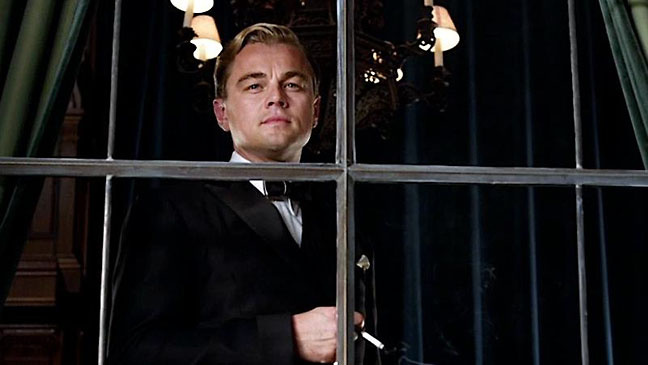
Oh sweet Jay. What can I say? I will spare you my thoughts on The Great Gatsby itself (Baz Luhrmann's version, I could write another novel about the novel itself), but I can't resist delving into a literary character revival. Jay Gatsby. The romantic, the great tragic hero, the essence of the American Dream and it's eventual disillusion. It's a story and character we romanticize, an inherent part of our natural American landscape; book sales skyrocketed this year under the imminence of the the movie release. Gatsby was first revived in film by Robert Redford (in the hands of Francis Ford Coppola) in 1974 and then again last year by Leonardo DiCaprio (Luhrmann). The story, and Gatsby himself, is perhaps the ultimate warning against retrograde - eternally moving backwards towards a girl, goal, a point, a green light.


"Gatsby believed in the green light, the orgastic future that year by year recedes before us. It eluded us then, but that's no matter - tomorrow we will run faster, stretch out our arms farther....And one fine morning--"

You know the rest, or at least you should.*


*In case you were sleeping in English class. "So we beat on, boats against the current, borne back ceaselessly into the past."


Friday, November 22, 2013

A Memorable Shelving: The Maytrees and The Lowland

I know people that are very particular about their bookshelves, fanatically so. For those particularly bound to the stories they read, it can become a very heavy task – not just a stowing away – but a finding of refuge for something that once read becomes a part of your emotional memory and intellectual framework. How does one go about that?

Imagine a bookshelf where Homer rests heavily upon Kafka, or Franzen rubs bindings with Austen. Hempl stacked upon Palahniuk, supported by Descartes. How unsettling to find Shakespeare nestled amongst the Naturalists. Actually, Shakespeare might rest upon anything most comfortably. And then, there is Joyce and Stephen King pressed together, reticent.

Every time I go to put away a book I’ve finished, I too can understand the thirst for classification, a thoughtful tidiness. Thinking about unlikely pairings is quite fun actually. It allows for the birth of a compelling literary argument, to let certain stories lie down together. To what extent do the stories collide, or diverge so aggressively? We might even find that some would surprise us with their similar stories, a similar feel.

I read two books this past month in a fever dream of words. Perhaps because of time, but mostly because of their arresting language, setting, and similar themes they will forever resonate with me as pairing. Two books I could shelve together and rest assuredly at their placement, sounding the same as they roll off my tongue: Annie Dillard’s The Maytrees and Jhumpha Lahiri’s The Lowland.


The Maytrees was published in 2007 and is one of two fiction works by Dillard. It is slight in size, but full of what some have described as mysterious and arcane language and thoughtful, heavy themes on love and marriage. The Lowland was published this year (nominated for the National Book Award) and tells the multi-generational tale of two Indian brothers, born just a few minutes apart, but living separate existences in Calcutta and America. From any angle these may seem like two very different books, and don’t misunderstand that they are indeed, very different. But in their essence they are love stories (aren’t they all somehow?). They are love stories wrought from the bonds of brotherhood, marriage, and progeny – bound or broken by the common act of desertion. This desertion, whether decided by will or by some dire providence, alters the course of both narratives and we come to endure with those left behind. Their will for survival, the things that are done to understand or to harbor, and mostly the things that are done for the people that they love. Both stories follow the arch of the inevitable – change and aging and death – but what endues is the heaviest theme: love’s great cruelty is that it does not allow for forgetfulness.


A setting, the sea

Both stories are born in the lowest of lands, close to the flatness of the sea. The quiet, coastal aesthetic lends a balance to the tempo of the narratives, and yet at the heart of each story the tide measures out each coming sea change – a reminder that underneath quiet waters there are always movements we are not privy to.

The Maytrees is set in Provincetown: “what still seems antiquity’s surface…that exposed and mineral sandspit” – where Lou and Toby Maytree first fall in love – developing their own syncopated rhythm, learning to speak a delicate language at once their own. The sea is always a quiet third party within their marriage, a marking of intimacy and foretelling of storms, even until the very end: “here came sneaking the tide. Its raised rims caught star light that streaked along the beach like lighted eels.”

The Lowlands begins and ends near a flooded plain outside of a Calcutta neighborhood. But one of the brothers, Subash, relocates to Providence, Rhode Island for his PhD program. It is there that he becomes surrounded by the ocean: his oceanography campus overlooking the Narragansett Bay, a frequent visitor to the beach front under the Newport Bridge, and as compass to his surroundings: “Opening the door, he saw that the tide was in. The sky was bright, the ocean clam. No sign, apart from all the seaweed that had washed like empty nests up on the sand, of the storm there had been.”

Edward Hopper, Rooms by the Sea

An act, the desertion

Desertion is the common theme that pervades these novels. It's no matter really if desertion comes by decision or divinity. Do these differ so much to the one that’s left behind?

For Lou Maytree it is an undoing – an attempt at extricating something long embedded within her skin. A relearning, for newness always requires some sense of retreat: “She would have the rest of her life to pace lost ground.” And yet, when she and their son, Petie, are asked to reopen themselves it happens with such quick, innate understanding that one would imagine that nothing was ever lost at all.

For Subash in The Lowland it is an undertaking – an attempt at salvation through understanding. Some part of him made more whole by seeking the beloved assets of his fellow. Gauri was never his, nor was she meant to be. He is seemingly made whole by the arrival of his daughter, Bela, but even that alliance is a rickety assemblage.

For Gauri it is indoctrination – the only way that she can rectify herself against remembering. Throwing herself into philosophy – chasing time –and through it coming into a treaty with herself: “Guari’s mind had saved her. It has enabled her to stand upright. It had cleared a path for her.”

For Bela it is a betrayal – made ripe in her childhood and then again, as she faces the possibility of her own progeny, she is made privy to the evolution of her own lineage. One memory that she cannot forget, one that she will never know.


An end, memory remains

In the end, it is Lou and Udyan that we hear from; the deserters. It is not their fault that their narratives in absentia so greatly affect the tides of the rest. This is the way a love story so quickly brushes up against, and makes its bed with loss and separation. For nothing that is once given, can so easily be taken away. To forget: that kind of theft would be too merciful for something that was once so consuming. How easy to recall the figure of a departed spouse, to relive a childhood memory of brotherhood adventures, how simple to summon the profile of a mother you have tried to forget, how effortless to return to intimacy. Gestures are just the shadows of relearned memories that we will always be accustomed to; they will survive longer than anyone.


A shelving, a final note

I have tried to make the discussion of storyline vague in this reading so that you will be moved to read these beautiful books. Please do. Read them today, or tomorrow, or take all of next year. I will not forget the way they, together, consumed me. Above all, I walked away with a feeling: and a terrible, but tender perch from which to discern memory.
We are elastic, or so we long to be. Bound permanently to time, but so wiling to test the restrictions of that stretch: for love, for nostalgia, for our offspring, even for the brevity of a thrill. How helpless we must look against providence, but how we kick and scream and wail and curse and fight and moan and sweat against it. In the end, when we are less elastic or tired of the stretch itself, we will revel in memory like it’s sustenance, survival. It probably is. If not, pray for amnesia. 

Now, back to where to shelve these books...

Thursday, October 31, 2013

Cavalier

“Speak until the dust settles in the same specific place.” – James Vincent McMorrow


James Vincent McMorrow has a voice that will break your heart. A strange falsetto that will linger in that lofty, unknown register for longer than you’d like. His debut album, Early in the Morning, was a favorite of mine in 2011. It is an album very much rooted in the folk tradition: anthemic choruses, confessional lyrics, and of course that voice. And yet, there is a quality to his music that provides various layers of listening and reveals manifold influences. We Don’t Eat and Down the Burning Ropes find extra strength with the addition of the chorus, and they also use the ostinato note that is most common in Jazz and R&B. Could you not just as easily lay an electronic beat under these songs to compliment the repetitive rhythms and notes?

With this in mind, I was delighted to hear Cavalier from McMorrow’s forthcoming album, Post Tropical (out on Vagrant Records, January 2014). The sobering sentiment of his music remains the same, but the banjo and acoustic guitar have been shelved for electronic layering and smooth soul sounds. Is that also brass I hear triumphing along with his falsetto at the end of the song? Comparisons to James Blake, D’Angelo, and perhaps even Jamie Woon are sure to arise. I can't help but hear even earlier sounds as well - sounds similar to those I grew up with. Synthesized, beat-driven, often sentimental ‘soft rock’ from the late 70’s and early 80’s. If his cover of Higher Love was any indication, I might be inclined to listen to McMorrow’s track along with the likes of early Steve Winwood or Phil Collins. And I’m certain I wasn’t the first to notice the album art for Post Tropical and it’s resemblance to Christopher Cross’ 1979 album. Flamingos unite.
In anticipation of the full Post Tropical album, I like to listen to Cavalier as inherently attributed to earlier music forms, deepened by modern soul and R&B influences, but driven further forward by rapt attention to what's come before. An understanding of (and perhaps even a tribute to) this landscape has allowed him to put notes to a boarder picture, and create a singular sound for himself.


Let’s talk about the video which is cavalier in and of itself. I heard the song before I played the video and though I didn’t expect a naked McMorrow singing soulfully from a dark empty room, I’m not certain I was expecting such a soulful song to elicit such a tragic, story-driven scene. The video is directed by Aoife McArdle, a Northern Ireland native and director/writer. She attributes most of her visual inspiration to writing and this attention to narrative is apparent in her work. The story opens at the proper beginning - the middle - with a feverish attempt at forgetting. Settings are born from the most lonesome of night spaces – a strip club, bars, bathroom, laundry mat, convenience store, and a nearly vacant bus. As if this insalubrious nighttime were a burial ground for a love story. But similar to that tale they always told us about the cream in the milk, so too will the sadness of memory rise to the top. I remember my first love.


It’s clear that McMorrow should not be pegged as a folk artist. There’s a genre-blending here that leaves me rapt for what other sounds might emerge from his new record. But if one thing is woven throughout his repertoire, it’s a sense of sweet lamentation, the loss of an idea or some fond love -and all I hear throughout is a beautiful, Irish Caoineadh song. I remember my first love.


Tuesday, April 30, 2013

"Every Love Story is a Ghost Story"

"Every Love Story is a Ghost Story." 
- David Foster Wallace


This is not a ghost story. It is a figure, hazy like an apparition before me, moving with meaning and speaking in voices familiar. As real and warm as flesh, and yet somehow unanchored to anything at this present hour. Faceless, at least in recollection, but I take more assurance in sound than shapes. Why is it that ghost stories are always told in hushed voices, in dimly lit spaces? A feeling of intimacy so notional that fear is inspired before visions make themselves known. Perhaps it's not the presence of something foreign, but the absence of something certain that breeds fear. Upon taking past moments to mind, I find them so slippery and ephemeral that they are a vision more feared than any real or retold haunting. This is not a ghost story, it's just a memory.

I am fascinated by how we are intrinsically drawn to themes and motifs of language, whether conscious or unconscious. It's no surprise that the supernatural is a theme that prevails in current and popular art forms in many ways; it seems you can't have a modern love story without a blood-hungry vampire, or a survival guide that doesn't involve running from a zombie. Cover your veins and watch your back, these are creatures that deal with the most fearsome subjects - love and mortality. But what about the quieter, more evasive presences? Taking a recent delve into my musical repitoire, I found myself to be haunted by ghosts at every turn. Song titles, albums, subtle references, reoccurring themes. What is the source of this unsettling?

This got me thinking about ghosts as a modern artistic and literary motif. In literature ghosts appear in Greek tragedy and with abundance in Shakespeare, haunting the pages of Hamlet, Macbeth, Julius Caesar and Richard III. In Macbeth, Banquo moves through crowded rooms, but is visible only to the eyes of Macbeth himself. In Hamlet, the ghost of the King appears early on the scene and changes the mental and physical course of the landscape that lies ahead; it is he who convinces Hamlet to seek revenge on King Claudius. Many of our modern stories are built on the shoulders of these tales. Then the Victorian era begot the quintessential ghost story, a blend of folklore and twisted psychology meant to inspire fear and terror. The emergence of Spiritualism and Freudian psychoanalysis led to deeper, darker provocations of the human mind and the supernatural was not only a topic of parlor conversations but prominent in literature and the arts.

Many decades later, the post-modern era shows a strong return to this Victorian gothic sensibility; ghosts haunt every turn. But before writing this off as simply neo-gothic, we should consider this haunting as a vital part of post-modern thought, and a fragment of our current zeitgeist. The ghost that I've encountered in modern music and text provides a single and profound psychological haunting. These are not ghosts that change the shape of plot lines, cause death, or induce terror. They reveal an unexpected presence, but it's more of the mind and less of the body - a dissonance between time and space, a confusion of memory. A dusty visitation from the past, a longing for something other than the present moment, an elegy to a lover long forgotten.

Each story is so wrought with longing, I couldn't help but think of the phrase attributed to David Foster Wallace, "every love story is a ghost story." In an article written by Wallace's biographer, D.T. Max questions the evolution of the phrase itself, perhaps not even originally ascribed by Wallace. The conclusion itself seems ghostlike: "hard to trace pathways" reveal little - maybe he penned it, maybe he didn't. I was also particularly struck by Max's mention of Weltschmerz. In a generation so defined by familiarity with media, a continual influx of information, and the domination of digital technologies, it's strange to come across the presence of something so dim and nebulous as the ghost. Perhaps in a word so hyper-defined, longing is all that's left. The resurgence of the ghost motif reminds us that the physical world is incapable of transcending that of the mind, or more deeply - the emotional subconscious. Even in our current environment, the most terrifying and transfixing of topics are not those that we can conjure, but those that we can't. Memory, dust, love, longing, and some unspoken whisper that reminds us that what we're touching will never rival what we're longing for. This is not a ghost story, it's just a memory.

For your listening pleasure I've complied a Spotify playlist with some haunting tunes that I will continue to add to, please feel free to make suggestions as well: Ghosts.  And yes it does include The Tony Rich Project. You're welcome. I've also included some of my favorite tracks below. Listen and be haunted.

Typhoon, Ghost Train
"You only move when I give chase, when I catch you, you dissipate."


Lord Huron, Ghost on the Shore

"Die if I must let my bones turn to dust
I'm the lord of the lake and I don't want to leave
All who sail off the coast ever more
Will remember the tale of the ghost on the shore."


Sanders Bohlke, Ghost Boy

"With our TV and radio friends, 
we colored our names in with permanent black pens, 
in momentary sentiments."


Black Rebel Motocycle Club, Some Kind of Ghost
"Oh oh oh sweet lord come home, 
Don't feel some kind of ghost."

Sunday, September 30, 2012

NW: Community, Language & Visitation

The Penguin Press, 2012


In the fourth novel from Zadie Smith, a new prose style and ambitious narrative complexity emerges. NW is a novel primarily about language and the way that language defines us as people in the context of the modern world and the cities and communities that have raised us.

The story is one of visitations and intersections, showing those who are at home within the constructed world and those who are just guests within the story - as framed by power, and ultimately by language. The narrative follows two main female protagonists, Leah Hanwell and Natalie Blake (formerly Keisha Blake), childhood friends drawn together by a powerful incident when they were young. Woven within the stories of Leah and Natalie are also Felix and Nathan - the male presence, written primarily as visitors within a world over which they have not been able to garner control.

Set in NW London, where Smith set White Teeth and also where she hails from, the four main characters were raised in the same housing estate. A sense of community is established -whether real or fashioned by events and shared environments -and this community is what binds the stories together. While they are together, they are equally disparate in their own realities and Smith uses different language motifs to make the distinctions of each character more clear.

NW was very quickly compared to the work of Virginia Woolf, particularly Mrs. Dalloway, for the use of stream of consciousness prose. But while it's inherently inspired by it's Modernist predecessors, it's also filled with the language of the present climate - google maps directions, text messages, IM conversations, stage directions, concrete poems, patios, conversations overheard while waiting, pop culture references - an onslaught of hyper-modern language motifs. Perhaps even more resounding in the comparison to Woolf is the woman's struggle to make a place for herself in the modern world, and the use of time to measure this conflict. I couldn't help but hear Big Ben striking "first a warning, musical; then the hour, irrevocable" (Woolf), throughout my read of the novel and it's many references to time. In fact, Smith goes so far as to hold women as the cadence, the timepiece:

"If it was not quite possible to feel happy for him it was because the arrangement was timeless - it did not come bound by the constrictions of time - and this was the consequence of a crucial detail: no women were included with the schema. Women come bearing time."

Even in the telling, Smith clearly understands this is the most complex of her works, and uses her own language throughout the novel to engage with the reader. She pulls through the narrative, as if to separate herself from the story, and address you: "reader, keep up!" Characters are often referred to by their full name, as if this use might serve as a formal separation between author, protagonist, and reader. We may share a community within the novel, but we are not the same.

And, keep up you must. For as much emphasis is placed on language, it's perhaps the implications between the language that play the most important role in the story. Conclusions must be drawn between what is told and what is felt, a motif that the late Modernists mastered, but perhaps becomes most relevant now in the age of technology. At the same time that one is or seeks to be the "the sole author" of their story, it becomes clear that that, "nothing survives in the telling."

Smith crafts very careful communities - both in Willesden, in relationships between protagonists, and in the pages of the novel itself - and then is careful to show that these communities have been authored. The illusion is broken, both for Leah and Natalie, Felix and Nathan; but alas, for the reader as well.
"People were not people but merely an effect of language. You could conjure them up and kill them in a sentence."

Perhaps my only complaint with the novel was the progression towards the novel's ending and it's ultimate conclusion. It seemed that something this carefully wrought by language ran out of time and came to a desperate end within the last 50 pages. Communities are established and destroyed, and thus in the ultimate act for control, the narrative is changed drastically not by language, which has been our guide, but by force. However, being a masterful artist, I can't help but wonder if this was Smith's intention after all. For as quickly as communities were created in the text (by socio-economic conditions, geography, incidents in youth, birth and death), they can just as easily be destroyed. A dramatic play for control -a search for authorship -is made by each of the characters within the novel, and at the end of the novel it seems their story has not been fully drawn. Control is lost. The characters are merely ghosts; failing to understand their progression towards, and ultimately away from their own conclusions about themselves.

Smith still reigns master at writing histories for characters of race, socio-economic struggle, and especially of women trying to build a place for themselves within the roles society has demanded. As a fan of Woolf, I was especially drawn in by the prose, and felt the language was a successful, resounding attempt for Smith. Though, let's be careful not to place this story on the shelf with other Modernists as a few reviewers have suggested, because in its essence and conclusion it's inherently a story of our current Zeitgeist. Ultimately, we are all just visitors in the communities that have been constructed for us, or even unknowingly created by our own hands.


For more wonderful writing by Zadie Smith, check out her article on Jay Z, The House that Hova Built.

© 2012 Eamonn McCabe

Wednesday, September 26, 2012

Liberal Arts: A Story About Knowledge

"For in much wisdom is much grief: and he that increaseth knowledge increaseth sorrow."
-Ecclesiastes 1:18


It's pretty easy to get annoyed with Ted Mosby on How I Met Your Mother (seriously kids, where is your damn mother?), so it's a good thing that actor Josh Radnor also writes and directs thoughtful, earnest movies. Radnor's first feature, Happythankyoumoreplease - which he wrote, directed and starred in - was nominated for the Grand Jury Prize and won the Audience Award at Sundance in 2010.
Liberal Arts premiered at Sundance earlier this year and reached theaters this month (limited release, or check your cable provider for the IFC release). It's a love song to academia, intellect, and a gentle warning to the dangers of nostalgia and the ideals that come along with knowledge.

The story follows Jesse (a college admissions counselor), a thirty-something who battles ennui with his job, personal life, and life in New York City. As the desperate point of apathy is reached, Jesse receives  a call from his favorite college English professor, Peter Hoberg (played by Richard Jenkins), and he is invited to return to his alma mater in Ohio to attend a retirement party. As any flailing academic would, he eagerly returns to the arms of the one who provides knowledge. When he arrives on the grounds of his former campus, it seems nostalgia might drip from his pores - what a placating medicine. 
While there, Peter faces retirement as gracefully as most face deletion from academic life - with terror; and Jesse meets a free-spirited college sophomore, Zibby (Elizabeth Olsen), and they quickly connect over consuming dialogue about education, books, classical music, and theater  An obvious tug-pull relationship develops between Jesse and Zibby and it becomes clear that she will play the role of the passionate improviser, and Jesse the intellectual - the heedful idealist. While he is there Jesse also meets a "yes-please" hippie (thank you for the laughs, Zac Efron), and encounters Dean (Joe Magaro) an at-first patronizing genius, who turns out to suffer from the darkness of intellectual mania and isolation.
Eventually life must go on, as it does, and Jesse returns to New York. An ardent Zibby leaves Jessse with a classical music mixed CD in hand (where can I sign up for this offering?) and promises to begin a relationship of the pen. Their letters serve as an emotional and romantic catalyst for their relationship and eventually Jesse is headed back to campus to reconcile with reality and romanticism.

The writing in this movie is earnest, witty, and especially poignant for our generation of young adults. Rador delivers concise and genuine dialogue, but wavers just slightly in filling the spaces without dialogue -the narrative movement. Overall, the film's message and emotional thesis was clear and well delivered. At times it bordered on the sentimental as it reached for narrative solutions. But where there were lulls or bits too sweet, they were certainly made up for by unfeigned acting performances. The casting was near perfect and the performances were ravaging - in the best way.  It seems that Rador truly acts with his heart bleeding on his sleeve, which is why Ted Mosby and Jesse seem to have similarities.  I couldn't help but notice them, but I also couldn't help but empathize with this character and his "gooey little heart". Richard Jenkins, break my heart - another convincing and truly devastating performance as a "life after academics" professor struggling with the loss of intellectual identity. Allison Janney also gives a hilarious, raw performance as a Romantics professor. Just perfect. And then of course, Elizabeth Olsen. Olsen nearly over delivers in this role giving us just the right amount of emotional maturity, balanced by the vulnerable presence of one of the most important presences in the movie: youth.

I was truly delighted by this film in many ways. It's no secret that it spoke to me on many personal levels, being the "victim" of a liberal arts education, and suffering under the brute hands of romanticism and nostalgia at all times. It certainly was intentional that the Romantics were woven into the film - the cruelest of literary periods.  For at the same time as one must learn to rely on emotions as their aesthetic guide, they must also remove the intellectual perspectives that inhibit the raptness of the present moment. Knowledge does not allow for the unascertained of the present; therefore we can only romanticize the past, and theorize about the future, but untimely fail to understand what this feels like. True emotion is only experienced in the present, everything else is just knowledge, memory, or theory.

The relationship between Dean and Jesse was one of my favorite parts of the film.  Not haunted by romanticism or nostalgia like other characters in the film, Jesse ultimately suffers devastatingly from the weight of his intellect. Jesse and Dean meet first in a coffee shop and briefly discuss an unnamed author, though it's clear by reference that the author is David Foster Wallace.
As I marinated further on the film, I couldn't help but think about the commencement speech that Wallace gave at Radnor's alma mater, Kenyon College, where this movie was mostly filmed. I read through the speech and found a quote that seem fitting as pairing to, or thesis for, Liberal Arts.


"Given the triumphant academic setting here, an obvious question is how much of this work of adjusting our default setting involves actual knowledge or intellect. This question gets very tricky. Probably the most dangerous thing about an academic education--least in my own case--is that it enables my tendency to over-intellectualise stuff, to get lost in abstract argument inside my head, instead of simply paying attention to what is going on right in front of me, paying attention to what is going on inside me." - David Foster Wallace, Commencement Speech Given at Kenyon College, 2005


Wednesday, July 18, 2012

Words as Weapons, Songs for Hope

I used to believe in writer's block; I thought it was actually a symptomatic condition - a uptake inhibitor of words and stories, but these days I'm not so sure. Words are everywhere; how can we misplace them?  Shapes and patterns prevail in our minds, we build them even in darkness. The building of patterns (or ideas, if you will) is innate, instinctive; they are only then further manifested in words. Nabokov himself said about writing, "The pattern of the thing precedes the thing." Can we say that the act of writing is simply transmitting these prevailing ideas from shapes into words? It seems reaching a writer's block is simply just a hesitation, a hesitation built mostly of cowardice. There are always stories to tell, but perhaps I do not have the nerve to create a permanence for them.

My mind has been busy the past few months, but my blog has been idle.  In May I was hoping to share some short stories in honor of short story month.  I sat for days in my apartment with towers of books surrounding me; moated by Joyce, Oates, Carver, Cheever, Salinger, Hempel, Fitzgerald.  Shall I stop here? I could literally go on for days. I eventually failed to organize my passions and could not commit to five favorite stories.  I toyed with sharing my own short fiction, and could not hit "publish." How stripping, how lasting; what would be taken from me?
Earlier this month, I was blown away by this. Thoughtful and gracefully bare, this letter was called many things, but never art. I wanted so badly to talk about Frank Ocean, about vulnerability and self-expression, and what it means to be an artist and how that relates to being an activist. Where does the man end and the artist begin?

Perhaps that's just it. Is being an artist bound to being an activist? Are we naive to think that we can separate what we create from who we are? Creation comes with responsibility, but art requires seeking the truth, whatever the cost. The great injustice to art is censorship, but doesn't the responsibility of creation require that we censor our words in some ways? What weapons will my words create, and who will they sacrifice?
It's more terrifying than I would like it to be.

One day I will loose the terror, and I will rise fearless with words as forces that are full of truth and permanence. They will, as one of my idols so bravely said, "march and fight." But I better be prepared for them to kill as well.
Until then I will share what I know, and perhaps what is safe. Below are some really stellar bands that have released great albums this year. Enjoy their sounds. Let them sing of hope, until then.


Trampled By Turtles, Stars and Satellites

Stars and Satellites has been one of my favorite albums of 2012. I've enjoyed their previous releases as well, but this album in particular perfectly marries a traditional bluegrass sound with progressive rock notes and a transmigratory narrative. An ode to being on the road, the lyrical journey beings in darkness with Midnight on the Interstate and ends with the quiet of the morning in The Calm and the Crying Wind.  
I've always loved bluegrass for it's rich background and darker tales. Uneducated music followers often relate bluegrass to American country music, but it's origins speak otherwise. It's the cold Irish fiddle, the Appalachian banjo in some terrified nightIt's Scottish funeral songs, African-American jazz sounds and gospel notes singing shapes of hope. It's holy, it's lonesome, and it's everyman's tale.  
I can't help but think of the Medieval "Everyman" play when I hear these notes. Like the medieval morality plays, even these modern tales elaborate on the goodness and evil of everyman and the conflict therein.
The morality is complete within itself; a detailing of this inherent conflict and yet a surrender to those things of greater power...whatever that might mean in worlds both ancient and modern.
I can't get enough of the anthemic ballad, Alone. 


"The days and nights are killing me 
The light and dark are still in me 
But there's an anchor on the beach 
So let the wind blow hard 
And bring a falling star"


Walk The Moon, Walk The Moon

Another great release of 2012, I actually discovered Walk The Moon by way of some of their lighter, dance-friendly songs like Anna Sun.  But, I was blown away when I came across Iscariot, which feels like a quiet prayer song in the midst of battle.  Do not be fooled; though it presents itself like an offering it's sick with the syrup of betrayal and is indeed a battle-ready revenge ballad.  And who can't use one of those?  If I fail to finish this post, it will be because the last minute of this song just killed me. I would trade more than 30 pieces of silver for the song to go on for another minute, even though it's already 5:24 long.  There's enough passion, enough anger, enough sadness to fill the whole album with just this song.  
I'm sorry, were there other songs to talk about here?  Check out Anna Sun (dance on, hipsters!) and Shiver, Shiver. And though I judged them immediately for making a song called Quesadilla - it's actually quite catchy.  Dance on. Die on.


First Aid Kit, The Lion's Roar 

If I am not also in this field wearing my paisley frock and dancing, I honestly don't know where I am.
I've been a fan of these Swedish sisters since their 2008 Drunken Trees EP and their cover of the Fleet Foxes' Tiger Mountain Peasant Song, which helped them along with their growing popularity. The Lion's Roar, released this year, is a field dream of an album.
You cannot hear their haunting, full voices without calling to mind the voices and sounds of their American music idols, as seen in Emmylou.  The spirits of Emmylou and June are certainly here. And though they can easily call to mind the mothers of American folk music, their sound still bears a tonality I can't help but call Nordic. The reverence and allusions to those who have come before them, combined with modern perspectives and languid tones make this make this a perfect epistle on modern love from start to finish.

"In the hearts of men
In the arms of mothers
In the parts we play to convince others"


The Lighthouse and The Whaler, Pioneers


Let me start by saying this: The Lighthouse and The Whaler's 2009 Self-titled album was a really phenomenal full-length debut.  If you aren't yet familiar, make haste. Be sure to listen to Morning.
Their 2012 album This Is an Adventure will be released in September and word on the streets (actually, word on their website) is that it's produced by Ryan Hadlock (The Lumineers) and mastered by Greg Cabrillo (Bon Iver, Grizzly Bear).  But though these subtle hands of influence can be seen, their sound is unique, full of life and energy, and their soundscapes and lyrics still have the depth I like to see in my music.  It feels light, but it's heavy. Pioneers is from this year's EP and I can't get enough.
"I was wishing we could go back to how it was before age impaired our reach," indeed.


S T A Y   T U N E D.

Sunday, May 13, 2012

The Shape of Heaviness

From here I can almost see the sea. I will know when they're coming; I'll see the little armies rise from the ashes of the sea.  They will ascend unannounced, terrifying; but somehow quiet. Slippers crafted from sadness, not a sound will be made made as they climb the shore. From here I cannot see their faces, only the shapes of their bodies.  Contrary to what we know about war and invasion they will not be men, nor will they be women-  sexless as angels. What will they carry in their arms?  Will their weapons be made of heaviness or lightness - a certain kind of  burden only Kundera can describe.

Some theorize the world will end in whispers.  But whispers are light and impermanent.  Their complacency floats away cruel and buoyant.  I see the end in the arms and mouths of these armies, quiet only until they reach the shore.  I can only hope when they rise their weapons to meet me, they are heavy.  Crafted of wood, brass and sun-drenched copper, with strings, reeds and hides - bows made of the strongest linen.  And when the weapons touch their lips they will make a sound that will lie down upon upon me, heavy and permanent.  Play me a song.

 We are most surprised by the weight and shapes of those things that can hurt us.

Summer Heart, I Wanna Go


Delta Spirit, Yamaha


Sharon Van Etten, We Are Fine


Noah Gunderson, Fire

While all other songs are from albums released in 2012, I just came across this live version of Fire and could not resist.  Noah Gunderson is yet another great artist from the Northwest and the soul and sound of this song feels, well heavy -in the most wonderful way.  Check out Family on Bandcamp.


The heavier the burden, the closer our lives come to the earth, the more real and truthful they become. Conversely, the absolute absence of burden causes man to be lighter than air, to soar into heights, take leave of the earth and his earthly being, and become only half real, his movements as free as they are insignificant. What then shall we choose? Weight or lightness?”
-Milan Kunderea

Friday, April 6, 2012

April is the Cruelest Month

And I will show you something different from either 
Your shadow at morning striding behind you 
Or your shadow at evening rising to meet you; 
I will show you fear in a handful of dust.
-T.S. Eliot, The Wasteland


As a student of literature and a disciple of words, April always calls The Wasteland to mind.  "Memories and desire" of a Modernist sensibility, it's a foreshadowing of darker times; a discontentment with fellow man, art, and religion. A call to an earlier time, or perhaps a return to it's classical binds and mythologies.
I can't help but turn contemplative as April arrives, and think about our current zeitgeist.  I recall a professor once speculating if we would ever be able to rise from the depths of post-modern thought.  I'm not sure we have.  Perhaps we stripped down so far we've removed the context for what came before.

Let us not forget our fathers.

This is collection of a few artists I've been enjoying lately. There's nothing essentially  particular that ties these songs or artists together, but a feeling I have when I hear them.  There's an ambitious quality, a conglomeration of sounds, and a return to innocence and wonder.  
In a time when popular music makes one question our intellectual curiosity, its delightful to know that there are artists making music that borrows from the past, overreaches conventional music trends, evokes mythology, and reveals fear. In them I hear the shape of the future in the same breath as the past.  It was Eliot himself who said that "the conscious present is an awareness of the past in a way and to an extent which the past's awareness of itself cannot show."1


Blake Mills, Wintersong
This song is reaching all over the place, like eager hands in the night.  It's smooth and unhurried, but also  rough and sporadic.  With sounds this varied, it easily could easily be broken into a few songs of it's own. But it's just structured enough to come together to create one freakin'-un-real song.  In my book, you'll never loose points for overreaching.  It's fresh and fun and ends in a thrill of sounds and voices.
Mills is an acclaimed guitarist and at just 24 years has already toured with Band of Horses and Andrew Bird, among others. Wintersong was released on Breaking Mirrors in 2010, but it's hard not to keep coming back to this song, and the album for that matter.


Patrick Watson, Into Giants
If you aren't yet familiar with Patrick Watson, now is the time.  In 2007, Watson lent his vocals to The Cinematic Orchestra's album Ma Fleur on the song To Build a Home, and subsequently stole my heart.  In case you're currently soul searching, this song will change your life.  For real.  Try it.  His new album will be released in the US on May 1st.  Mark you calendars.
Even on it's own, Watson's voice is reminiscent of another era.  It floats with lazy, sexy ease and is tinged with falsetto.  Layered with female harmonies and symphonic instrumental magic (more trumpet, more trumpet!), this song practically sends telegrams to a long-ago time when music was wide-eyed and playful.  Yet it still grounds and moves in a way that only modern music can.  I can't wait to hear the rest of the album.


A.A. Bondy, Skull & Bones
Believers was one of my favorite albums of 2011, and highly underrated in my opinion.  With his haunting, synthetic vocals, darker tales; and overall minor tonality this whole album was mesmerizing.  It's so chill you might sit back and smoke it, but so entrancing you might believe it would play as the world quietly burned to an end.


Middle Brother, Mom and Dad
Another great album from last year.  2011 was hot.  Middle Brother is a super-group of members of Deer Tick, Dawes and Delta Spirit (true story kids).  If this group and song doesn't call to another time and place, I don't know what will.  The super-group (not to be confused with the boy band) was made stellar by Crosby, Stills, & Nash (you tooYoung) - and this takes me back...at least to my dad's vinyl collection.


The Lumineers, Ho Hey
Do you know how catchy that Fun. song is and you can't get it out of your head for days and just want to "set the world on fire" all the time?  I hope that's not just me...
This song is equally as catchy and contagious,  but has more heart.  It's troubadour-esque.  It makes me believe in something.  In case you missed Medieval Literature, the contextual message of the Troubadour is exaltation of the chivalric code and courtly love.
Their sound is a bit reminiscent of Typhoon, but with a more definitive lead vocal and more experimental range.  On their self-titled album their sound ranges from Bob Dylan to 1920's nostalgia. Check out Flowers in Your Hair and Flapper Girl.


"HURRY UP PLEASE ITS TIME"


1Tradition and the Individual Talent, T. S. Eliot, 1919

Wednesday, January 11, 2012

The Wild Youth

I'm from the school of the Proust, Fitzgerald and other voices obsessed with time.  As I often do, I found myself reflecting on youth this week.  The wildness of it; the audacity.  During my quest for art related to youth, I came across this song; The Wild Youth, by Daughter.  Elena Tonra's vocals are haunting, and a bit reminiscent of Florence Welch, but a touch more restrained and ethereal - a quieter force.  There's a lyric quality here that suits my mission for finding something tinged in nostalgia.

You can find the 4 track EP,The Wild Youth on Bandcamp http://ohdaughter.bandcamp.com/.  Another reminder that there are many great artists to be discovered through these platforms; a great way for bands to distribute directly to their fans, and fans to discover days of pleasure uncovering new music.  Yes, I said days.

Some with daring and yearning, will want to live in a youthful state forever.  But how could you resist the temptation to remove yourself from that place and look back with longing and terror.


"We thought we were young and that there would be time to love well sometime in the future. This is a terrible way to think. It is no way to live, to wait to love." - Dave Eggers, What is the What

Wednesday, December 14, 2011

This Music Crept By Me Upon the Waters

This music crept by me upon the waters,
Allaying both their fury and my passion
With its sweet air: thence I have follow'd it,
Or it hath drawn me rather. But 'tis gone.
No, it begins again.
-The Tempest


Of Monsters and Men, My Head is an Animal

There's something about Iceland; about the Nordic countries in general.  Cold, cruel, sparse, and terrifyingly beautiful.  Just ask Bon Iver, who's Holocene video was filmed entirely in Iceland.  That video is unreal (moment of silence).
I've always been fascinated by Nordic folklore, with images that are haunted with powerful female creatures, water spirits, invisibility, and enchanted places or Álagablettur.  
There's certainly enchantment in this music; but there's also some sort of light darkness, and of course monsters - which always make for good art and music.

Jam on: Little Talks
Repeat: Love, Love, Love


Lower Lights Burning, Coming Back

I'm a complete sucker for bands from the Northwest.  I survived the 90's in Seattle (or outskirts of, I should rightly state), and now I'm delighted to see that the angst and teen spirit that got us through that phase has transformed itself decades later into something equally as cathartic but graceful and softly provoking.
I was first drawn to this band after seeing their Coming Back video.  A tribute to sea, to song.  It feels more like Homer than Cobain.  It feels good.  No offense grunge, we had a good time together...

Jam on: Coming Back
Repeat:  Samson


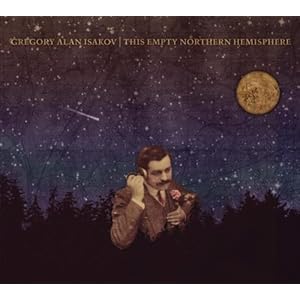
Gregory Alan Isakov, This Empty Northern Hemisphere


Ideally, I should have kept these albums to those released in 2011.  However...I seriously can't stop listening to this album, which was released in 2009.  It's like a sickness.  These words; this quiet, still, strong sound echoes everywhere.  And I can't get enough.  I'll let it speak for itself.

Jam on: That Moon Song
Repeat: Seriously, the whole album.


City and Colour, Little Hell


My dearest friend first exposed me to Dallas Green years ago in the depths of Canada, appropriately enough.  I really enjoyed it, but it didn't quite set-in until I happened upon a live acoustic performance of As Much as I Ever Could.  Whoa.  This year Little Hell was released and I think it's a quite striking album and highly overlooked.  There's a fresh, fuller sound here on tracks like Fragile Bird and Weightless, and of course that familiar sound and lyric quality I'm so drawn to in Northern Wind and Sorrowing Man.  Hope for Now will archive itself in my memory without ever being played again.  "Oh, and I sing."   His voice is truly haunting and its refreshing to hear a solo guitarist sing honest, pointed  lyrics about love and loss and sorrow without screaming infidelities..if you know what I mean.


Jam On: Little Hell
Repeat: Grand Optimist


Brothers of End, Mount Inside


Back to the Northern Hemisphere we go.  This album is weirdly delicious.  The album itself unfolds like a story; ephemeral, almost creepy and at times upbeat; it's certainly a journey from beginning to finish.  Give a few listens, and you'll find that sounds are reminiscent of those as varied as Sigur Rós, a touch of Midlake, The Amazing, a bit of Simon & Garfunkel if you dare.  I know it sounds crazy.  It's a ride people, get on it.

Jam on: Daybreak
Repeat: Valinge Träsk